
Underarms
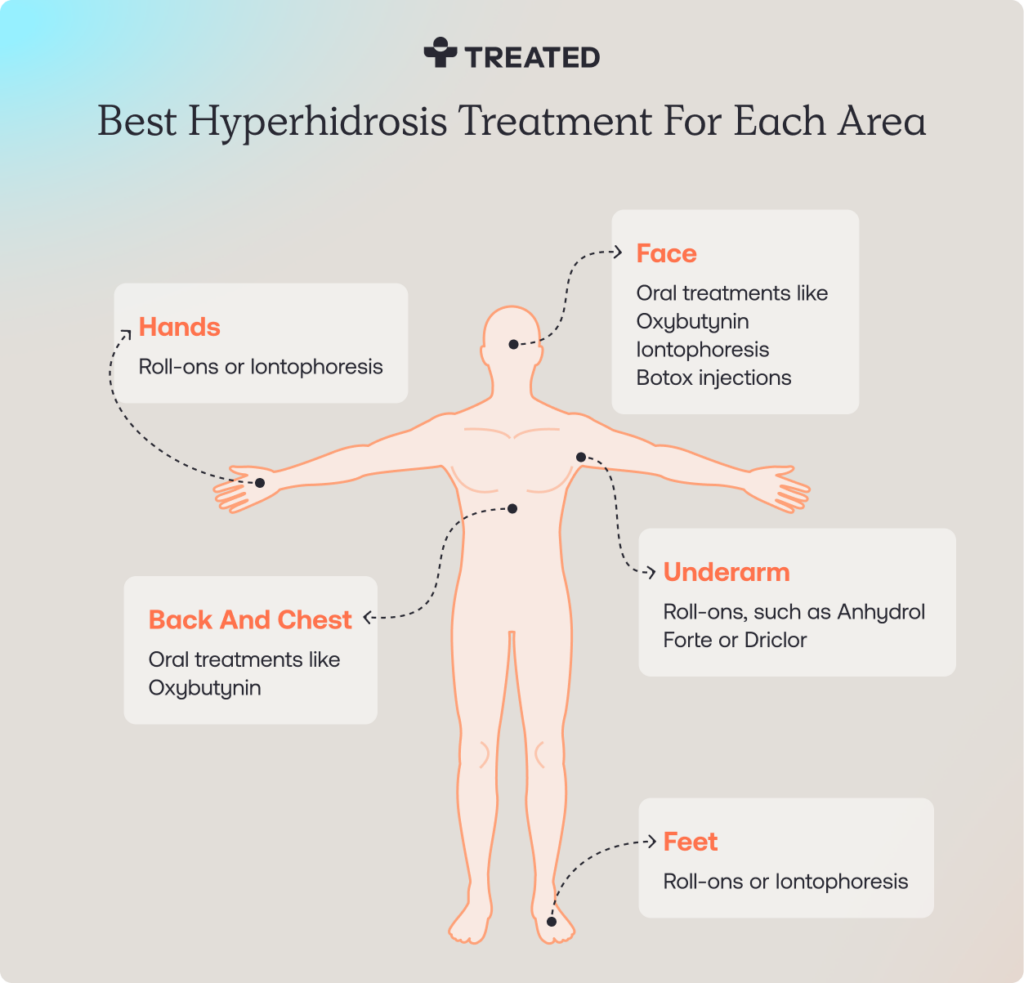
The skin on your armpits is much thinner than it is on other parts of your body, making it more sensitive. Using harsh products can cause it to get irritated. As a result, roll-ons are a convenient option for underarm hyperhidrosis.
Anhydrol Forte and Driclor are pharmacy-only roll-on treatments for excessive sweating. Both contain aluminium chloride hexahydrate, which works by forming a plug in your sweat ducts to block the release of sweat – basically like a sink plug but for your armpit. It’s usually applied for two consecutive nights, followed by a two-day break. If you have sensitive skin, you can take a longer break in between, but this might make it less effective.
Side effects like mild skin irritation, redness, and itching are common with Anhydrol Forte and Driclor. Using hydrocortisone, a mild steroid, can reduce swelling, itching, and redness. Simply apply it the morning after applying the treatment.
Another thing you can use is absorbent pads. These pads are attached to your clothes to help absorb excess sweat. While it's not a treatment per se, it can still be a useful option.
Hands and feet
Hands and feet have thicker skin, which allows for the use of stronger treatments. You can use Anhydrol Forte or Driclor, applying them in the same manner as you would on your armpits. But for better absorption, wear socks or gloves after application.
Another effective treatment option uses an iontophoresis machine, which has shown promising results in studies. You place your hands and feet in trays filled with water, through which a weak electrical current passes to the skin. Although the exact way it reduces sweating isn’t fully understood, it’s believed to:
- Block the flow of sweat in the outer layer of skin
- Disrupt nerve signals that tell sweat glands to release sweat
- Decrease pH value to reduce the amount of sweat produced.
While the iontophoresis machine can be costly, think of it as an expensive upfront investment for a lifetime treatment for hyperhidrosis
If for any reason you prefer not to use medication or treatment, a quick and easy method is to wear moisture-wicking gloves and socks. As the name suggests, they effectively absorb excess sweat, helping to keep your hands and feet dry.
Face
Your face is one of the most sensitive areas of your body, so it’s best not to use harsh treatments on it like Anhydrol forte. There are iontophoresis machines available for your face, but they are more pricey than the ones for hands and feet.
As a result, oral treatments (like Oxybutynin or Glycopyrronium bromide) may be the best option for managing facial hyperhidrosis. Both of these medications are used off-label for hyperhidrosis, meaning they aren’t officially approved for this condition, but your doctor may recommend them if they believe they’ll be safe and effective for you.
These medications work similarly, by blocking the nerve signals that stimulate the sweat glands, and need to be taken daily. Additionally, both medications may cause side effects, so it's important that you read them so you know what to expect. The choice between the two will depend on your preferences and what works best for you.
Botox (botulinum toxin A) is another option. One study found Botox to be a safe and effective way to treat excessive sweating on the face. Participants experienced a noticeable drop in sweating just four weeks after receiving treatment. For 9 out of the 10 people involved, the benefits continued for at least five months. Also, all patients who took part in the study reported that the treatment worked extremely well and were very satisfied with the results.
Back and chest
Your back and chest are larger areas of skin, which can make treatment more challenging. While roll-on antiperspirants can be used, you’ll need to use a large amount of them to cover the entire area. As a result, it’s often better to use oral medications such as Oxybutynin or Glycopyrronium bromide.
Some other things you can do to reduce or mask sweating include:
- Avoiding wearing tight clothing, as this can increase sweating.
- Opting for white or light-colored clothing, as it better hides sweat stains.
- Staying away from synthetic fabrics like nylon or polyester, as they can worsen sweating.
- Using absorbent pads to soak up excess sweat.