Trusted Shops is a company that validates online merchants and offers buyer protection services.
They audit the processes companies use to trade online and provide a 'TrustMark' to those who meet their criteria of being price transparent, and offering quality customer service and data security.
Price checker
1.5mg
£34.95
30 Tablets £34.95
60 Tablets £46.95Save £22.95
90 Tablets £58.95Save £45.90
Prices include:
Express shipping
24 hour shipping by secure courier.
Consultation + Access to our clinicians
Ask our experts anything you like, any time you want.
Total
£34.95
Save £0.00 each order
Reviewed on October 19, 2026. byMs Sanjeda ChowdhurySuperintendent Pharmacist + Independent PrescriberRegistered with GPhC (No. 2202465)Next review due on Oct 19, 2029.
Last updated on October 19, 2026.
Product info
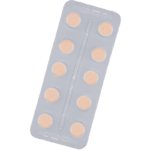
Natrilix SR is a tablet treatment for high blood pressure, also known as hypertension.
It’s slow-release, and works by reducing the pressure on your artery walls.
The tablets come in one strength, 1.5mg, and are taken once daily.
Price checker
1.5mg
£34.95
30 Tablets£34.95
60 Tablets£46.95Save £22.95
90 Tablets£58.95Save £45.90
Prices include:
Express shipping
24 hour shipping by secure courier.
Consultation + Access to our clinicians
Ask our experts anything you like, any time you want.
Natrilix SR is a prolonged-release tablet that you take once a day. It’s commonly prescribed for high blood pressure (hypertension). But as a diuretic, it can also help your kidneys to remove excess salt and water from your body, which can help reduce fluid retention in your tissues (oedema).
High blood pressure is very common and affects more than one billion people worldwide.[1] It’s a condition where the force of blood against the walls of your arteries is consistently too high. This can put extra strain on your heart and blood vessels, increasing the risk of serious health problems like heart disease, stroke and kidney problems. Which is why it’s important to monitor and manage your blood pressure to keep it within a healthy range and reduce the risk of complications.
Hypertension is typically defined as a reading of 140/90mmHg or higher (or an average of 135/85mmHg at home). If you’re over 80, the threshold is usually set at 150/90mmHg (or an average of 145/85mmHg at home).
The readings taken at home are sometimes lower than those taken at the doctor’s office because of something called “white coat syndrome”. This is when the anxiety of being in a doctor’s surgery causes your blood pressure to rise. But if your blood pressure is normal when measured at home, you may not need treatment for high blood pressure.
On the other hand, ideal blood pressure is usually considered to be between 90/60mmHg and 120/80mmHg. For people over 80 years old, the target is to keep it below 150/90mmHg (or 145/85mmHg at home).[2]
How does Natrilix SR work?
Natrilix SR contains indapamide, which belongs to a class of medicines called thiazide-like diuretics. It controls high blood pressure through a dual-action mechanism:
It prompts your kidneys to pass extra salt and water out of your body through your urine. Reducing fluid volume lowers the physical strain on your circulatory system.
It directly relaxes and widens the smooth muscle in your blood vessel walls, allowing blood to flow through more easily.
Because Natrilix SR is a sustained-release formulation, it releases indapamide gradually over 24 hours at a lower 1.5mg dose. This gives you smooth, continuous blood pressure control throughout the day while carrying a significantly lower risk of causing low potassium levels (hypokalemia) compared to older, immediate-release diuretic tablets.
What doses of Natrilix SR are there?
Natrilix SR only comes in one strength: Natrilix SR 1.5mg. Each tablet contains 1.5mg indapamide.
Typically, you take one tablet once a day. It’s important to follow your clinician’s advice and continue taking it for as long as they tell you to. Treatment for hypertension is usually life-long.
NHS (2019). High Blood Pressure (hypertension). NHS
This page was written by The Treated Content Team.
This page was medically reviewed by Ms Sanjeda Chowdhury on October 19, 2026. Next review due on October 19, 2029.
How we source info.
When we present you with stats, data, opinion or a consensus, we’ll tell you where this came from. And we’ll only present data as clinically reliable if it’s come from a reputable source, such as a state or government-funded health body, a peer-reviewed medical journal, or a recognised analytics or data body. Read more in our editorial policy.
Natrilix SRIndapamide
How to take Natrilix SR
The usual dose is one tablet a day, preferably in the morning. You can take it with or without food. Just remember to swallow it whole with a glass of water and avoid crushing or chewing it.
Before and during treatment with Natrilix SR, your clinician will order routine blood tests to check your kidney function and monitor your blood electrolyte levels (specifically sodium and potassium).
Make sure to follow your clinician’s instructions when taking this medicine. And if you have any questions or concerns, don’t hesitate to message our clinical team. They’re always here to help.
How long does it take Natrilix SR to work?
Indapamide, the active ingredient in Natrilix SR, starts working shortly after you take it, usually within a few hours. But this can vary from person to person. Once you’ve taken a dose, it takes around 12 hours to reach peak levels in your bloodstream. With regular use, the medication’s levels in your blood become more consistent between doses. It typically takes about 7 days for the drug to reach a steady level in your blood.[1]
It may take a few weeks before you see any noticeable improvements in your blood pressure. And it may take three to four months until you see its full effect. So be patient and continue taking the medication as prescribed.[2]
What should I do if I make a mistake when taking Natrilix SR?
If you accidentally take too many Natrilix SR tablets, it’s important to contact your clinician right away. Taking a very large dose can lead to symptoms like nausea, vomiting, low blood pressure, cramps, dizziness, drowsiness, confusion and changes in urine production.
If you forget to take a dose, just take the next one at your usual scheduled time. Avoid taking a double dose to make up for the missed one.
Since high blood pressure treatment is usually long-term, it’s important to ask your clinician before you stop taking your medication. That’s because if you stop suddenly
Treated trusted sources:
www.medicines.org.uk. (n.d.). Natrilix SR 1.5 mg Tablets – Summary of Product Characteristics (SmPC) – (emc). [online]
Thomas, J.R. (1985) A review of 10 years of experience with indapamide as an antihypertensive agent. Hypertension. 7(6 Pt 2):II152-6.
This page was written by The Treated Content Team.
This page was medically reviewed by Ms Sanjeda Chowdhury on October 19, 2026. Next review due on October 19, 2029.
How we source info.
When we present you with stats, data, opinion or a consensus, we’ll tell you where this came from. And we’ll only present data as clinically reliable if it’s come from a reputable source, such as a state or government-funded health body, a peer-reviewed medical journal, or a recognised analytics or data body. Read more in our editorial policy.
Natrilix SRIndapamide
Natrilix SR isn’t suitable for everyone, and there are some things that you need to be aware of when taking it.
Here’s all the official info on it. If anything is unclear, let our clinician know, and they can talk with you about it.
Natrilix SRIndapamide
FAQ: Natrilix SR
Have something specific you want to know? Search our info below, or ask our experts a question if you can’t find what you’re looking for.
Is Natrilix SR similar to other treatments for hypertension?
Answer:
Indapamide, the active ingredient in Natrilix SR, is also available as a generic (unbranded) medication. Both these treatments are diuretics, and because they contain the same active ingredient, they both work in largely the same way. There are, however, a few other medications for hypertension that work similarly to Indapamide to lower your blood pressure.
Other diuretics used in hypertension include bendroflumethiazide and chlortalidone. Other classes of diuretics, such as loop diuretics (furosemide) or potassium-sparing diuretics (spironolactone), are also available. These are typically reserved for specific conditions like heart failure or resistant high blood pressure rather than standard blood pressure management.
How is Natrilix SR different from other treatments for hypertension?
Answer:
There are several types of high blood pressure medications. The best one for you depends on factors like your age and other health conditions.
In the UK, NICE guidelines specifically recommend indapamide as the preferred thiazide-like diuretic for treating high blood pressure, either as a Step 1 treatment or combined with other blood pressure medicines:
If you're under 55 or have type 2 diabetes, you'll likely be prescribed an ACE inhibitor (such as ramipril, lisinopril or enalapril) or an angiotensin-2 receptor blocker (such as candesartan, valsartan or losartan).
If you're over 55 or of African or Caribbean origin, you'll usually be offered a calcium channel blocker (such as amlodipine, felodipine, or verapamil). If this isn’t suitable for you, you may be offered a thiazide-like diuretic like indapamide.
If one medication isn’t enough, indapamide is often added as a second- or third-step treatment alongside an ACE inhibitor or a calcium channel blocker.
Many people need a combination of low-dose medications to manage their blood pressure effectively while minimising side effects.
Can you get side effects from Natrilix SR?
Answer:
Just like any other medication, Natrilix SR can cause some side effects. Don’t worry though, not everyone gets them.
Some of the more common side effects of indapamide are:
Red raised skin rash
Allergic reactions, particularly in individuals with a history of allergies or asthma
Vomiting
Red pinpoints on the skin (purpura)
If you’re worried you might have a side effect to Natrilix SR and you can’t find it in the list above, you can see a full list of possible side effects in the patient information leaflet (PIL).
Last updated on Oct 19, 2026.
How we reviewed this page:
Our experts continually monitor new findings in health and medicine, and we update our articles when new info becomes available.
Why this page was updated on Oct 19, 2026
Content checked and updated as part of our 3-yearly periodic review, to ensure accuracy and currentness.
Current version (Oct 19, 2026)
Edited by: The Treated Content Team.Medically reviewed by: Ms Sanjeda Chowdhury, Superintendent Pharmacist + Independent Prescriber
Nov 02, 2023
Published by: The Treated Content Team.Medically reviewed by: Dr Daniel Atkinson, GP Clinical Lead
How we source info.
When we present you with stats, data, opinion or a consensus, we’ll tell you where this came from. And we’ll only present data as clinically reliable if it’s come from a reputable source, such as a state or government-funded health body, a peer-reviewed medical journal, or a recognised analytics or data body. Read more in our editorial policy.
This is healthcare on your terms.
All from the comfort of your device. Get access to what you need, when you need it.
100% online
Ask questions and get expert recommendations, at the touch of a button.
Tailored choices
We'll narrow down some treatments for you to choose from based on your medical profile.
Express delivery
Receive your treatment by secure delivery, in discreet packaging.
Repeats made easy
Set your own delivery schedule and pause or make changes any time you like.
Sanjeda runs our pharmacy, based in Bolton. She works closely with our doctors and prescribers, ensuring that the treatments we recommend are safe, and that all medicines are dispensed correctly. Sanjeda is also an Independent Prescriber. Registered with GPhC (No. 2202465)
When we present you with stats, data, opinion or a consensus, we’ll tell you where this came from. And we’ll only present data as clinically reliable if it’s come from a reputable source, such as a state or government-funded health body, a peer-reviewed medical journal, or a recognised analytics or data body. Read more in our editorial policy.
Reviews you can trust
All of our reviews are collected from real patients after their treatment has been delivered.
We publish reviews collected through independent platforms including Reviews.io and Trustpilot.