VerifiedFact Checked
The do’s and don’ts of genital warts

The do’s and don’ts of genital warts

Genital warts are caused by low risk strains of human papillomavirus (or HPV), and they’re a very common sexually transmitted infection. It can take weeks to months before symptoms appear after contracting the virus.

Genital warts can be unpleasant, but if you follow the correct advice they can be very manageable and clear up faster. Your immune system will gradually clear the virus on its own over a few months to a couple of years. Some prescription treatments can clear up the appearance of warts faster while your body deals with the underlying virus.

Sanjeda Chowdhury
Medically reviewed by
Sanjeda Chowdhury, Superintendent Pharmacist + Independent Prescriber
Go to
Reviewed on Jul 22, 2026. by Ms Sanjeda Chowdhury Superintendent Pharmacist + Independent Prescriber Registered with GPhC (No. 2202465) Next review due on Jul 22, 2029.
Sanjeda

Last updated on Jul 24, 2026.

Was this article useful?
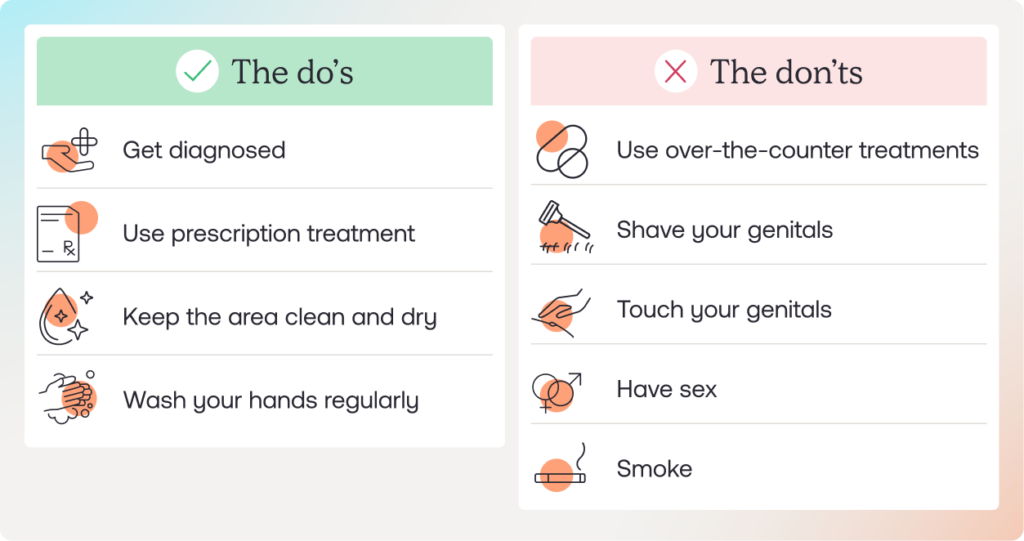
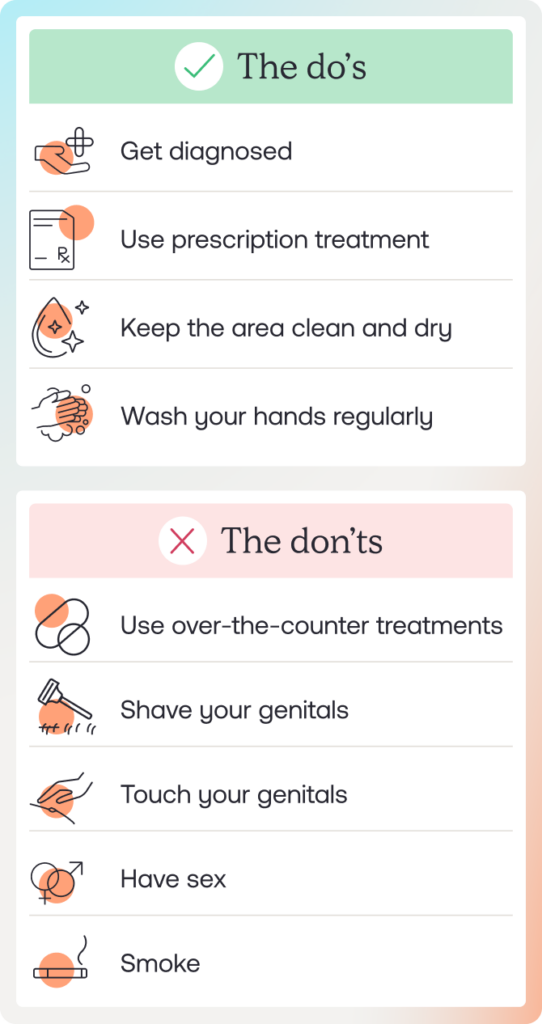
A table telling you what to do and avoid if you have genital warts. The do's: Get diagnosed, Use prescription treatment, Keep the area clean and dry, Wash your hands regularly Don't: Use over the counter treatments, Shave your genitals, Touch your genitals, Have sex, Smoke

Genital warts: the do’s

There are a few things you can do to stop genital warts spreading and speed up how quickly your immune system clears them. Let’s take a look at what you should do if you have genital warts.

Do: get diagnosed by a clinician

If you think you have genital warts, it’s important to rule out other possible conditions first. Getting a diagnosis from a clinician is the best way to confirm whether or not you have genital warts. They can look like ingrown hairs or skin tags, and if you have one of these, genital warts treatment won’t do anything to help.

Our online consultation can help diagnose whether your skin condition is genital warts or not, and help you get the treatment you need.

Do: use treatments for genital warts

Treatments like Warticon and Aldara can help to stop genital warts from growing and spreading. These treatments won’t affect the skin surrounding the warts, but they will help clear them up and allow new, healthy skin to grow in their place.

Warticon contains a plant extract called podophyllotoxin, which targets and eliminates wart cells to help clear up genital warts. It works better on softer warts than hard warts, and you can start to see a difference in as little as two weeks (but you might need more than one course of treatment).

Aldara works a little differently. Its active ingredient, imiquimod, is an immune response modifier. It triggers your immune system to release signalling proteins called cytokines, which fight the HPV infection. This stops the virus from multiplying, and eventually eliminates the warts.

Do: keep the area clean and dry

HPV thrives in warm, moist environments. This means it’s really important to keep the affected area dry, so make sure you pat down the affected area with a towel after washing. There’s almost no risk of sexually transmitted types of HPV transmitting through sharing towels.

Do: wash your hands immediately after contact with the area

HPV is transmitted through skin to skin contact, so it’s really important to wash your hands thoroughly after touching the affected area. The HPV that causes genital warts is different to the one that causes common warts on your hands and feet, so it won’t spread to your hands. But if you touch the infected area and then touch healthy skin around your genitals, the warts can spread there, too.

Genital warts: the don’ts

Just like how there are things you should do when you have genital warts, there are things you should avoid, too.

Don’t: use over the counter treatments

Over the counter wart treatments are usually designed for use on other areas of skin, like your hands or feet. They typically work by using chemicals to peel off layers of skin on the affected area to clear up warts. Using these treatments on the sensitive skin around your genitals can cause chemical burns, scarring, and deep sores.

Don’t: shave the area

Shaving can cause small cuts in your skin, where HPV can spread to and infect healthy areas. It can also cut or tear the warts (which can be painful and cause scarring), as well increase the risk of spreading them further.

Don’t: touch the area

You should also avoid touching or scratching the affected area, for similar reasons that you should avoid shaving. It can spread the virus to healthy areas of skin, and if you scratch the top off a wart it can cause permanent scarring.

Don’t: have sex

Having sex with genital warts can spread the virus, even if you use a condom. This is because a condom doesn’t cover the entire genital area, and any infected skin that comes into contact with healthy skin can spread HPV.

Having sex can also further inflame infected skin, which can prolong healing. So to avoid spreading the virus and give your skin the best chance to recover, it’s best to avoid having sex until your genital warts clear up.

Don’t: smoke

There’s some evidence that smokers are more susceptible to contracting HPV and getting genital warts, and that it can take longer for genital warts to heal in people who smoke. This is thought to be because smoking impacts your immune system, meaning smokers are more likely to get HPV when exposed to the virus and have a harder time fighting it off. So stopping smoking can help clear up your genital warts more quickly than if you were to continue smoking.

How to get the right treatment for genital warts

Getting a diagnosis for your genital warts is the most important first step in getting the right treatment. Speak to your clinician or fill out our online consultation to see if treatment is right for you. A clinician will need to look at the infected area to check whether or not it is a HPV infection causing genital warts, but if it is, they’ll be able to recommend treatment that can help clear them up.

If you receive a diagnosis and choose to get your treatment through Treated, we’ll deliver your medication in discreet packaging in as little as one working day.

How we source info.

When we present you with stats, data, opinion or a consensus, we’ll tell you where this came from. And we’ll only present data as clinically reliable if it’s come from a reputable source, such as a state or government-funded health body, a peer-reviewed medical journal, or a recognised analytics or data body. Read more in our editorial policy.

Reference Popover #ref1
Reference Popover #ref2
Reference Popover #ref3
Reference Popover #ref4
Reference Popover #ref5
Reference Popover #ref6
Reference Popover #ref7

Tell us what you want to hear.

Have a subject you’d like us to cover in a future article? Let us know.

Give us the inbox treatment.

We're making healthcare more about you. Sign up to our newsletter for personalised health articles that make a difference.

Disclaimer: The information provided on this page is not a substitute for professional medical advice, diagnosis, or treatment. If you have any questions or concerns about your health, please talk to a doctor.