Home | Blog | General health | Can lifestyle changes help with Tinea Versicolor?
Tinea versicolor is caused by a fungal skin infection that can affect your neck, chest, back or upper arms. It’s usually treated with antifungal formulas such as soaps, shampoos and creams.
In this guide, we’ll discuss lifestyle changes that can improve tinea versicolor, including food to add to your diet and types of clothing that might improve your symptoms.

The fungus that causes tinea versicolor usually lives on your skin harmlessly. But certain triggers cause this fungus to multiply, which can lead to patches of discoloured, dry or scaly skin, which are the common tinea versicolor symptoms.
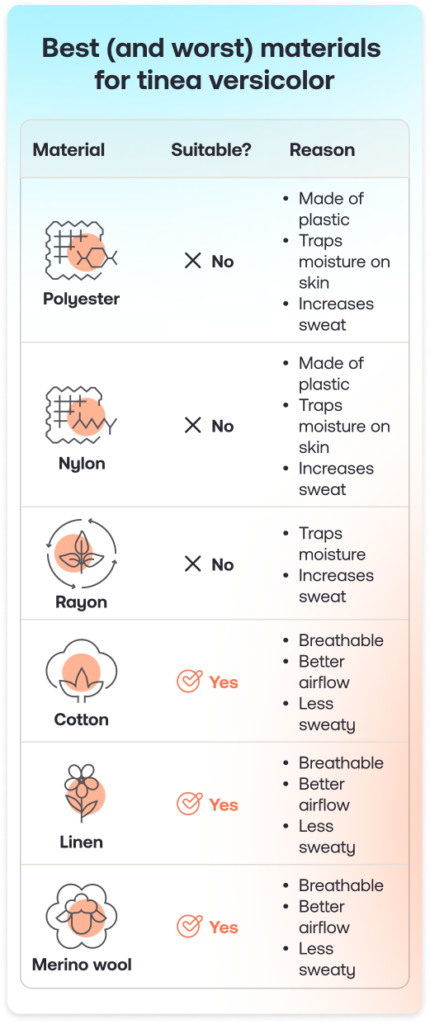
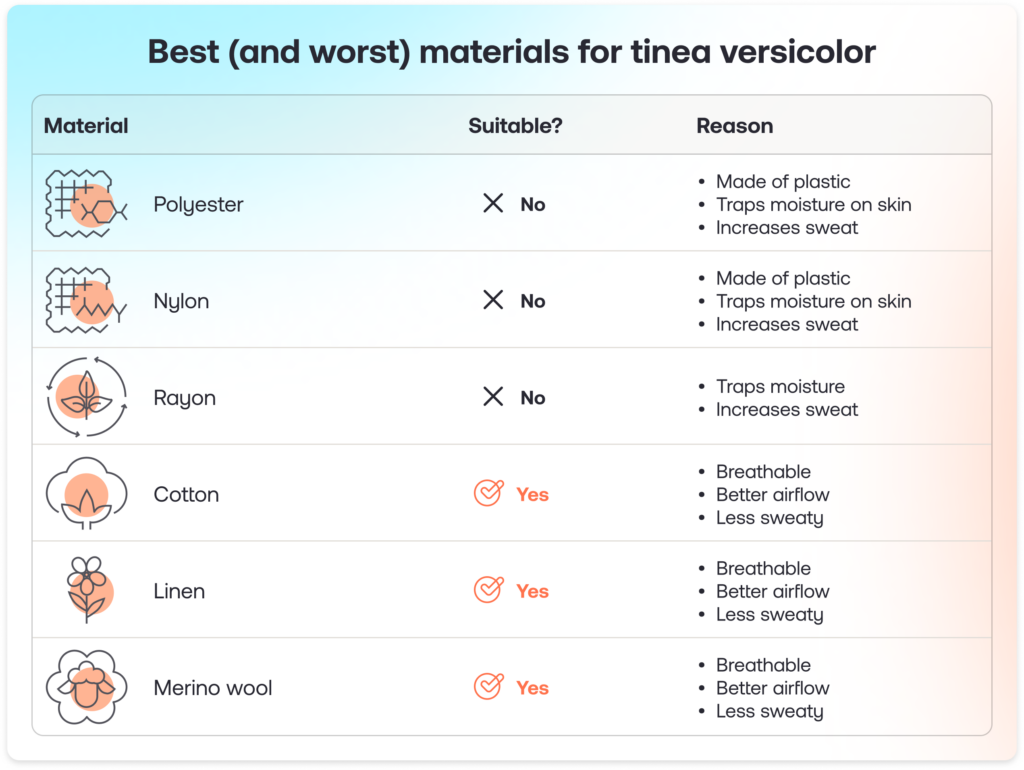
One of these triggers is thought to be hot, humid environments which encourage the fungus to grow on your skin. With this in mind, if you’re affected by tinea versicolor, it makes sense to wear breathable clothing whenever you can with an aim to stay cool and dry.
Certain types of clothing, such as cotton, linen and merino wool, allow your skin to breathe much more than fabrics like nylon and polyester. And when you’re exercising, choosing moisture-wicking fabrics that pull sweat away from your body can protect your skin from the heat and moisture which cause the fungus to multiply.
And during the warmer months, wearing short sleeves and looser fitting clothes means more air can circulate around your skin, keeping it cool and preventing a yeast overgrowth from spreading.
You should try to change your clothes as often as possible if you have tinea versicolor, especially if you’ve been sweating in them during the day. And If you’ve done a workout, change out of your gymwear and shower immediately, remembering to dry your skin thoroughly afterwards. This gives the fungus that causes tinea versicolor, Malassezia, less chance to grow.
Make sure to wash the clothes you’ve worked out in after every session, as the fungus can survive temporarily on unwashed clothes, and trapped sweat and moisture in fabrics can contribute to a cycle of reinfection.
And during an active flare-up, washing your bedsheets and nightwear, such as pyjamas, regularly can prevent yeast from building up and rubbing back onto your skin. Washing clothes at 60°C temperatures or higher is known to destroy most fungi, so this is something else to try when it comes to changing your bedsheets and towels. For clothes that cannot handle heat, you can use oxygen-based bleach soak, using a laundry sanitiser, or soaking in a solution of white vinegar (one part white vinegar to four parts cold or warm water).
There’s no evidence to suggest that the reducing the amount of yeast in food (Saccharomyces cerevisiae) you eat will affect the overgrowth of the skin yeast (Malassezia) that causes tinea versicolor.
But avoiding certain foods, and adding others to your diet, might help to reduce skin inflammation and excess oil on your skin that might make your symptoms worse.
Because Malassezia feeds on lipids and oils produced by your skin, you might want to avoid foods that encourage your body to produce more skin oil.
Insulin is thought to be one of the primary drivers of excess skin oil production, because raised insulin triggers hormones which tell your sebaceous glands to produce more oil.
So reducing your intake of foods that are high in sugar, such as sugary drinks, chocolate, crisps, and processed snacks might help clear excess oil from your skin. Cutting down on high glycemic index (GI) foods, such as white bread and potatoes, could also contribute to less skin oil production because they can cause sudden blood sugar spikes that raise your insulin levels.
If you’re aiming to reduce your sugar intake to avoid insulin spikes, then try adding more low-GI foods to your diet.
These include whole grains, such as brown rice and quinoa, and legumes and pulses like lentils, chickpeas and black beans.
Leafy greens, such as spinach and kale, are also low-GI and provide fibre and prebiotics, which can promote healthy gut bacteria that can help keep inflammation down. This can contribute to better immune health all round, which might help your skin stay resilient to fungal overgrowths.
Using shampoos that contain selenium sulphide or ketoconazole can help treat tinea versicolor by targeting fungal cells and eliminating them. Antifungal creams like Daktarin work in a similar way, by weakening the fungi so your body can fight off an infection.
But alongside using treatments, you might find that the way you shower can be adjusted while you’re managing tinea versicolor.
Water that is extremely hot can strip your skin’s natural barrier, which can lead to an overproduction of oil as your skin tries to repair itself. Harsh soaps can work in a similar way, so try to shower in lukewarm water when you can, and use gentle soaps that support your skin barrier.
And after each shower, make sure you dry yourself thoroughly to avoid trapping any moisture. Getting dressed too quickly after a shower, especially if you’ve done a workout, can mean your body’s core temperature stays raised, which can make you sweat again after you’ve showered.
This excess sweat and moisture can be a perfect breeding ground for fungi, which can prolong your tinea versicolor symptoms as you’re trying to treat an infection.
If making lifestyle adjustments doesn’t help improve your symptoms, it might be time to start a treatment. There are a variety of options available, including shampoos, tablets, and creams. ‘Antifungal washes’, which consist of soaps and shampoos and are usually applied daily, are often the first type of medication your clinician will recommend to treat tinea versicolor.
Sometimes, antifungal tablets, such as fluconazole or itraconazole, are used to treat the fungal infection systemically. If you’re unsure which type of treatment you need, your clinician can discuss your symptoms with you and make recommendations they think will be most suitable for you.
Hygiene Practices Against Dermatophytic Fungi: A Review of Strategies to Combat Antifungal Resistance. Biology, 14(8), pp.1016–1016.
British Association of Dermatologists (2023). Pityriasis versicolor.
Camera, E., et al (2023). Insulin and the sebaceous gland function. Frontiers in Physiology, 14.
Have a subject you’d like us to cover in a future article? Let us know.
We're making healthcare more about you. Sign up to our newsletter for personalised health articles that make a difference.
Disclaimer: The information provided on this page is not a substitute for professional medical advice, diagnosis, or treatment. If you have any questions or concerns about your health, please talk to a doctor.
We couldn't find what you're looking for.
Here's everything we treat. Or, if you're looking for something we don't have yet, you can suggest something.
By clicking 'Subscribe now' you're agreeing to our Privacy Policy.
(And leave your email too, so we can let you know if we write an article based on your suggestion.)
Last updated on Sep 21, 2026.
Our experts continually monitor new findings in health and medicine, and we update our articles when new info becomes available.
Sep 21, 2026
Published by: The Treated Content Team. Medically reviewed by: Ms Sanjeda Chowdhury, Superintendent Pharmacist + Independent PrescriberHow we source info.
When we present you with stats, data, opinion or a consensus, we’ll tell you where this came from. And we’ll only present data as clinically reliable if it’s come from a reputable source, such as a state or government-funded health body, a peer-reviewed medical journal, or a recognised analytics or data body. Read more in our editorial policy.
Superintendent Pharmacist + Independent Prescriber
Sanjeda runs our pharmacy, based in Bolton. She works closely with our doctors and prescribers, ensuring that the treatments we recommend are safe, and that all medicines are dispensed correctly. Sanjeda is also an Independent Prescriber. Registered with GPhC (No. 2202465)
MeetHow we source info.
When we present you with stats, data, opinion or a consensus, we’ll tell you where this came from. And we’ll only present data as clinically reliable if it’s come from a reputable source, such as a state or government-funded health body, a peer-reviewed medical journal, or a recognised analytics or data body. Read more in our editorial policy.