


VerifiedFact Checked
How to use the Bristol stool chart to decide if you need treatment

How to use the Bristol stool chart to decide if you need treatment

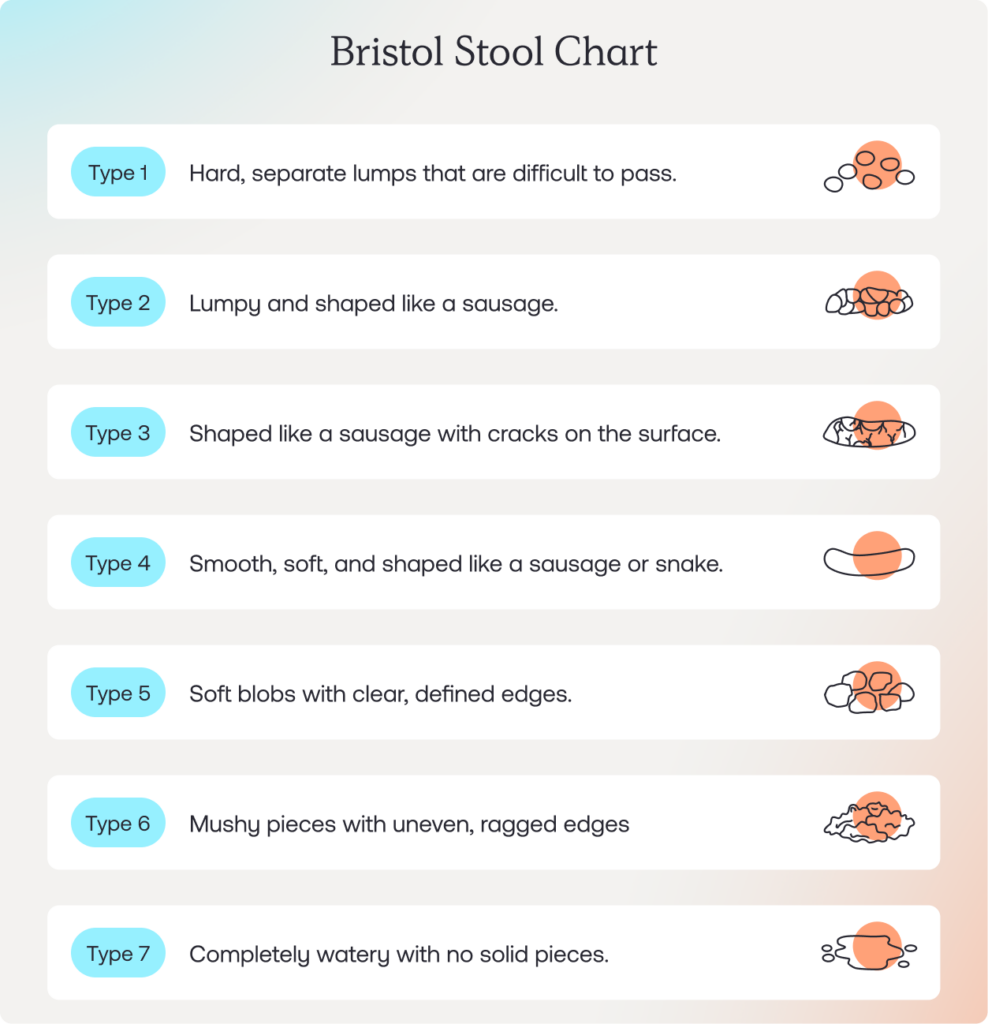
The Bristol stool chart is a simple way to understand what different stool shapes and textures say about your digestion. It can help you work out if things are moving too slowly (constipation) or too quickly (diarrhoea).

It can make it easier to decide what to do next, whether that involves treatment or speaking to a pharmacist or doctor about your diet or lifestyle.

Sanjeda Chowdhury
Medically reviewed by
Sanjeda Chowdhury, Superintendent Pharmacist + Independent Prescriber
Go to
Reviewed on Jul 03, 2026. by Ms Sanjeda Chowdhury Superintendent Pharmacist + Independent Prescriber Registered with GPhC (No. 2202465) Next review due on Jul 03, 2029.
Sanjeda

Last updated on Jul 22, 2026.

Was this article useful?

What is the Bristol stool chart?

Bristol Stool Chart
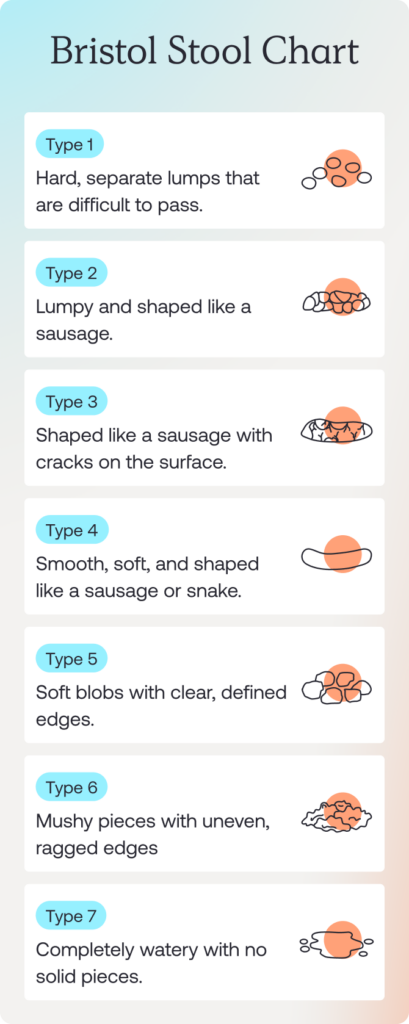
Bristol Stool Chart_m

When to see a doctor right away

It’s important to seek immediate medical advice if your symptoms aren’t typical of simple constipation or diarrhoea and include:

  • persistent abdominal pain,
  • blood in your stool,
  • unexplained weight loss,
    fever,
  • persistent vomiting alongside changes in your bowel habits, or:
  • if your symptoms began after travelling abroad,

as these may suggest an infection or something more serious.

Speaking to a clinician as soon as possible can help identify the cause of the symptoms and make sure you get the right treatment.

When should you use constipation medication?

Constipation treatment may be helpful if:

  • Your stools are consistently Type 1–2 on the Bristol Stool Chart, meaning they’re hard, lumpy, and difficult to pass
  • You haven’t been to the toilet at least three times during the last week or you’re going less often than usual
  • You often need to strain
    You feel like you haven’t fully emptied your bowels

But before reaching for medication, it’s usually worth trying a few simple lifestyle changes first. This might include increasing your fibre intake and drinking at least eight glasses a day—staying well-hydrated helps with digestion and prevents dehydration.

If these steps don’t make much difference, it’s likely you’ll need constipation treatment, so it’s a good idea to speak to your clinician for advice on the next steps.

What constipation medication is available?

There are multiple options available, but they can be classified into a few categories based on how they work in the body:

  • Osmotic laxatives: They draw water into your bowel, which can soften your poo and make it easier to move it along. They can take two or three days to work.
  • Stimulant laxatives: They trigger the bowel muscles to contract more strongly, helping to pass the stool. They can take six to 12 hours to work.
  • Bulk-forming laxatives: They help absorb water into the gut to increase stool weight and bulk (or size), which stimulates natural bowel movement. They can take two or three days to work.
  • Stool-softener laxatives: These help mix water into the stool, so it becomes softer and easier to pass without straining. They can take between 12 hours and three days to work.
Laxative type Osmotic laxative (draws water into the bowel) Stimulant laxative (speeds up bowel movement) Bulk-forming laxatives (increases stool weight) Stool-softener laxatives (makes stool easier to pass)
Oral tablets or capsules Magnesium citrate Bisacodyl (brand name Dulcolax) Senna (brand name Senokot) Methylcellulose (brand name Celevac) Docusate (brand name Dioctyl)
Sachets or powder that you drink Macrogol (brand names Movicol, Laxido, CosmoCol, Molaxole and Molative) Senna powder Ispaghula husk (brand name Fybogel) Sterculia (brand name Normacol) ----
Oral liquid or gel Lactulose (brand names Duphalac and Lactugal) Sodium picosulphate (brand name Dulcolax oral solution) ---- Docusate sodium oral solution
Suppositories or rectal gel Glycerol (glycerin) suppositories Bisacodyl (brand name Dulcolax suppositories) ---- Docusate rectal gel (brand name Norgalax) Arachis oil enemas
Sachets

There are a few options available:

You can find more information about these treatments, including who can and cannot take them, or possible side effects, in the patient information leaflet that comes with the medication.

These medicines are usually available over the counter. But if you have any questions or need advice, ask your clinician which one is best for you, as this can depend on factors like diet, overall symptoms, and whether your constipation is short- or long- term (longer than three months).

Macrogol sachets

Macrogol sachets, which are most commonly used. Brand names include Movicol and Laxido. These contain macrogol 3350 plus salts (also called electrolytes). They’re usually the first-line treatment because they’re effective and well-tolerated.

  • It’s an osmotic laxative that works by drawing water into the bowel, which softens the poo and makes it easier to pass. 
  • Typically, you’ll be advised to mix one sachet with water and drink it, and take it once or multiple times a day, depending on the severity of the constipation. 
  • They generally work within 6 to 48 hours. 
  • Most brands are basically the same in terms of effectiveness, but may differ in taste and cost.
  • It’s suitable for most people, but not if you follow a low-salt diet, have heart problems, Crohn’s, a blockage in your intestines, or have had an allergic reaction to macrogol.
Fibre-based sachets

Fibre-based sachets like Fybogel or YourFibre, which contain ispaghula husk (also known as psyllium). 

  • They work by increasing stool bulk, which stimulates bowel movement. 
  • They need to be taken with plenty of fluid and usually take two to three days to work.
  • They’re best for mild constipation.
  • Most adults can take them, including pregnant and breastfeeding women, but they may not be the right treatment for you if you have a blockage in your bowel, muscle weakness of the bowel, difficulty swallowing, a rare genetic condition called called phenylketonuria, changes in your poo that have lasted longer than two weeks.
  • Lactulose is also available as sachets containing liquid that you drink. 
  • It works similarly to macrogol, but can cause bloating and wind, which makes it less effective for patients suffering from conditions like irritable bowel syndrome (IBS). Also, compared to lactulose, patients treated with macrogol were 35% more likely to be successfully treated for long-term constipation at three months.
  • Takes two to three days to start working.
  • It’s suitable for most patients, including pregnant and breastfeeding women.
  • It’s not suitable if you have diabetes.
Senna

Senna is usually available as a tablet, but can also be found in sachet form, either on its own (usually as tea bags), or in combination with other laxatives like ishpagula husk. 

  • It’s a stimulant laxative, acting by directly stimulating your bowel movements. It’s also called a ‘motility enhancer’ sometimes.
  • Tends to work within 8 to 12 hours, making it more suitable for short-term or ‘rescue' use or to empty your bowels before surgery.
  • It’s suitable for most people, including children (with a prescription), but not suitable if you have severe stomach pain, show signs of dehydration, have Crohn’s disease, kidney disease, or heart problems, are pregnant or breastfeeding.

Capsules and tablets

Capsules are taken by mouth, once or multiple times a day, usually with plenty of liquid, with or without food. There are plenty of options to choose from, including:

Docusate

Docusate (brand name Dioctyl) is a stool softener, meaning it softens hard and dry stools and reduces the discomfort you get from going to the toilet. 

    • Typically, you’ll be advised to take one capsule up to five times a day, and reduce the dose once you start feeling better.
    • It usually takes one or two days to start working.
    • It may not be suitable for you if you have a blockage in your intestine, stomach pains, or have vomited in the past day.
Bisacodyl

Bisacodyl (brand name Dulcolax) is a stimulant laxative that works by stimulating the muscles in your gut to contract and to make it easier for you to go to the bathroom.

    • They usually take between 6 and 12 hours to work, so the usual recommendation is to take one or two tablets at night, so that you’ll be able to go to the bathroom the next morning.
    • It might not be the right treatment for you if you’re dehydrated, have severe stomach pain, are feeling or being sick, have a blockage in your bowel, have Crohn’s disease, are pregnant, or breastfeeding, or if your bowel muscles aren’t able to move food and liquid along
Senna

Senna (brand name Senokot) is another stimulant laxative like bisacodyl, but it’s considered a natural laxative, derived from the senna plant.

    • Usually works between 8 and 12 hours.
    • You’ll typically be advised to take one or two tablets at night, before bed, with a drink of water.
    • It’s usually indicated for short-term constipation or before colonoscopy or colorectal or rectal surgery.
Methylcellulose

Methylcellulose (brand name Celevac) is a type of laxative that increases the bulk or weight of your poo (by drawing water), which stimulates your bowel movements.

    • It’s usually recommended that you take 3 to 6 tablets twice a day, with 300ml (about 10oz) of liquid. 
    • Don’t take it just before bed, because it can cause wind, bloating, and stomach cramps and disrupt your sleep .
    • It can take two to three days to work.
    • They work well for people who need to increase their fibre intake.

When should you use diarrhoea medication?

Typically, you might benefit from taking medication if your stools are runny and you frequently need to use the toilet.

While medication can speed up your recovery, you don’t always need treatment for diarrhoea. It usually improves on its own within a few days.

One thing you need, though, is to hydrate well. This is because you lose a lot of water in your stools, and diarrhoea can lead to dehydration. So make sure you drink plenty of fluids, but avoid taking large, rapid gulps of liquid, as this can lead to stomach discomfort and cause you to go to the bathroom. Instead, take small, frequent sips of oral rehydration solutions, water, broths, or sports drinks. 

You can also drink oral rehydration salts containing glucose and electrolytes like sodium and potassium, to replenish what you lose in your stools. Talk to your clinician before taking any oral rehydration salts if you have diabetes, kidney disease, or other health conditions.

When should you have a chat with a clinician?

Talk to a clinician if you think you may have something more serious, like food poisoning, for example, if you experience:

  • symptoms that last longer than two weeks
  • fever
  • severe abdominal pain
  • vomiting repeatedly
  • blood in your stools
  • black or tarry stools
  • diarrhoea while travelling
  • unexplained weight loss

What diarrhoea medication is available?

There are two options:

Sachets

There are a few different sachet options available:

Dioralyte

Dioralyte is a powder that needs to be dissolved in water to help replace the salts and water lost in your stools, and treat or prevent dehydration. 

    • It contains a mix of sugar and electrolytes like disodium hydrogen citrate, sodium chloride, and potassium chloride. 
    • It comes in various flavours like blackcurrant, citrus, raspberry, and natural (flavour-free).
    • Seek medical advice before using it if you have liver or kidney disease, blockage of the intestine, diabetes, or you’re on a low sodium or a low potassium diet.
Diosmectite

Diosmectite (brand name Smecta) is a powder that needs to be mixed with water before you drink it.

    • It’s a natural clay that works by coating the gut to absorb toxins and bacteria and increase the consistency of your stools. Studies have shown that it can decrease the duration of short-term diarrhoea by one day.
    • Take one to three sachets a day, depending on how severe your symptoms are.
    • Diosmectite might not be the right fit for you if you have a bowel ostruction or you’ve had an allergic reaction to any of the ingredients in the medicine.
Enterosgel

Enterosgel traveller’s diarrhoea sachets contain an active ingredient called polymethylsiloxane polyhydrate that has a porous chemical structure that absorbs the harmful substances in your gut.

    • It can be taken for all types of diarrhoea, including viral, bacterial, IBS, and traveller’s diarrhoea.
    • The contents of the sachet should be mixed with water and taken up to six times a day, according to your clinician’s suggestions.
Capsules and tablets

If you prefer to take your diarhhoea treatment by mouth in the form of a capsule or a tablet, there are a few options available on the market as well:

Loperamide

Loperamide (brand name Imodium) works by slowing the movement of your intestines, increasing tightness of your anal muscles, and preventing salt loss.

    • Starts to work within an hour.
    • Take up to six capsules in 24 hours.
    • Don’t take it for longer than 48 hours (for short-term diarrhoea). If your symptoms persist for longer than this, talk to your clinician.
    • Don’t take loperamide if you experience severe diarrhoea after treatment with antibiotics, constipation, if your stomach is swollen, or if you’re having a flare-up of ulcerative colitis or any other inflammatory bowel conditions, or have a fever or systemic infection.
Bismuth Subsalicylate

Bismuth Subsalicylate (brand name Pepto-Bismol) forms a protective coating in your stomach and gut.

    • Starts working within 30 to 60 minutes.
    • Take up to eight tablets in 24 hours.
    • Talk to your clinician if your symptoms don’t improve after two days.
    • Check with a clinician if it’s safe to take it if you’re allergic to aspirin or any of the other ingredients, if you have diabetes, gout, a blood clotting disorder, or a rare inherited condition called phenylketonuria.

If you have more than three watery stools in 24 hours plus at least one of the following symptoms: fever, vomiting, nausea, stomach cramps, bloody stools, an urgent feeling of having to empty your bowels, that happen during a visit abroad, you might have traveller’s diarrhoea. In many patients, it resolves within three to five days without needing treatment with antibiotics.

Some cases, however, do require antibiotics, which can come as capsules as tablets. These are prescription only medications though, so you’ll need a visit to your clinician to start treatment.

Always follow your clinician’s recommendations when it comes to your medication and lifestyle advice. They can tailor your treatment, strength, and mode of administration to your exact needs.

How we source info.

When we present you with stats, data, opinion or a consensus, we’ll tell you where this came from. And we’ll only present data as clinically reliable if it’s come from a reputable source, such as a state or government-funded health body, a peer-reviewed medical journal, or a recognised analytics or data body. Read more in our editorial policy.

Reference Popover #ref1
Reference Popover #ref2

Tell us what you want to hear.

Have a subject you’d like us to cover in a future article? Let us know.

Give us the inbox treatment.

We're making healthcare more about you. Sign up to our newsletter for personalised health articles that make a difference.

Disclaimer: The information provided on this page is not a substitute for professional medical advice, diagnosis, or treatment. If you have any questions or concerns about your health, please talk to a doctor.