Private online pharmacies may sometimes inform your GP about any prescriptions you get from them. They’re not doing this to ask for permission. It’s simply to make sure the treatment is safe for you and to keep your medical records up to date.
For most treatments, it’s your choice whether to share the treatment you get from us with your GP. However, Treated recommends that you allow us to notify your GP about any treatment you get from us to ensure that all your healthcare providers have a current picture of your health.

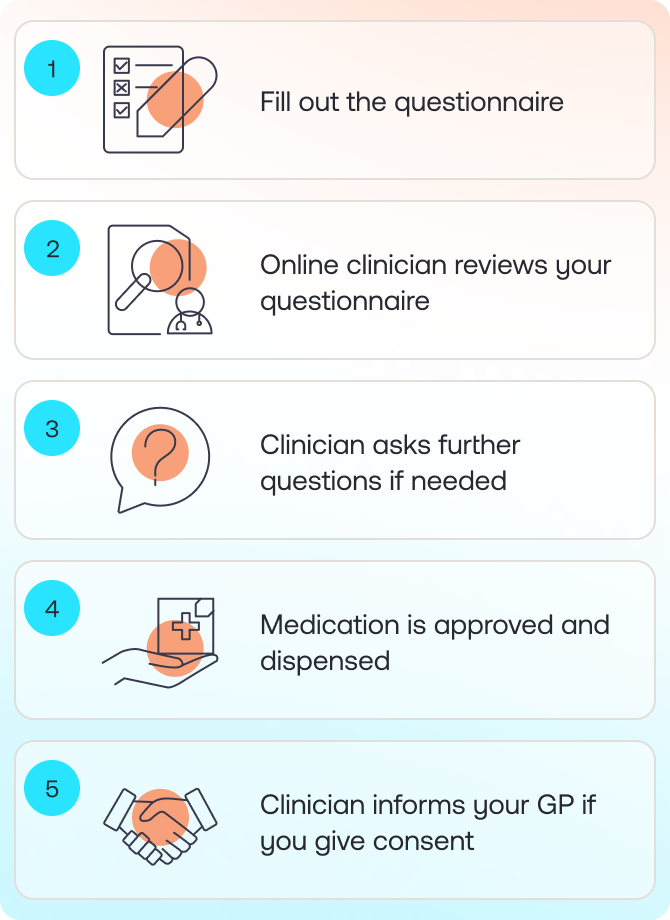
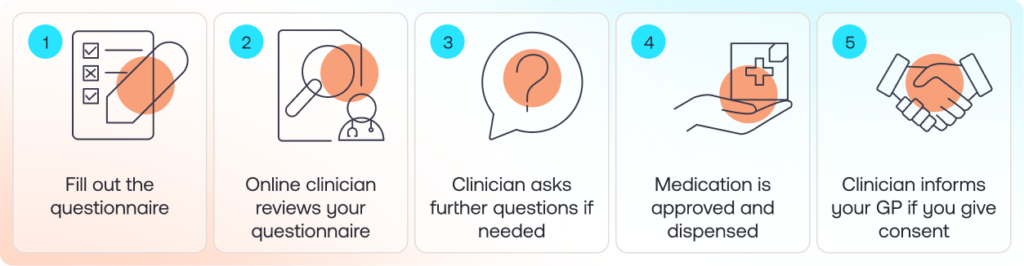
It depends on the medication and the online pharmacy you’re using, but here’s what typically happens at Treated when you place an order:
As to the actual timing:
Treated notifies your GP after your medication is shipped, usually within a few days. For most conditions, we only notify your GP if you tell us that you want us to. But for some long-term conditions, Treated is required to inform your GP when prescribing medication. These include:
This is because these conditions often need ongoing monitoring, and the treatments can interact with other medications or carry serious health risks. So keeping your GP in the loop helps make sure your health is managed safely and effectively.
If you consult about a condition where GP notification is required, we’ll always inform you before you submit your consultation for review.
In some cases, a clinician prescribing for a private online pharmacy may contact your GP to double-check certain details that are relevant to the prescription you’ve requested. But they’ll only do this if you’ve given them consent for this.
More commonly, though, they’ll ask for your permission to access your Summary Care Record (or NHS Health Record). They’ll do this if they feel like they need more background info about your health to make a safe and informed prescribing decision.
Consent to inform your GP is required for certain treatments, usually those that need close monitoring or are used to manage chronic conditions, and have been prescribed in the past by an NHS doctor.
At Treated, we will inform your GP when you receive treatment for the following conditions:
Example of medications that don’t require GP notification include:
That said, we still recommend letting us notify your GP or doing it yourself. Again, this is to ensure your GP is aware of your treatments, so that they can spot any potential medication interactions and monitor your health effectively.
No, they don’t need to approve it. You can receive the treatments you need from an online provider even without your GP’s permission. Even when we notify your GP, this is purely a safety check, not a request for permission. Once notified, though, your GP can flag any reasons why a particular medication may not be safe for you.
Adding private prescriptions to your health record can be helpful for a number of reasons, including:
The type of data shared with your GP can vary depending on the private provider. With Treated, if you consent to GP notification, we’ll share:
You can read more about this in our data handling and cookie policy.
Clinicians usually send a letter directly to your GP, but sometimes they give the letter to you to pass on yourself.
If you‘re issued a letter to share with your GP, the pharmacy will usually explain (and may ask you to confirm that you understand) that you’re assuming responsibility for passing on the letter to your GP.
Nothing will happen if you don’t send it, but not informing your GP when advised could affect the quality of care you receive in the future and, in some cases, may even put you at risk, because your GP won’t have a full view of the treatments you’ve had.
For example, certain weight loss medications or thyroid treatments can interfere with prescriptions for heart or blood pressure conditions. In these cases, it’s best if your GP knows about the medications you’re taking so that they can give you the right advice and make necessary adjustments to your current treatment.
Usually, no. Most of the time, a private pharmacy won’t ‘wait’ for a GP to respond before fulfilling a privately issued prescription, unless they have a specific safety concern and have requested further information from a GP. If your GP is notified after the prescription has been issued, and your GP then raises safety concerns, the pharmacy might decide not to dispense the medication.
Sometimes, yes, but only in a minority of cases. If an online pharmacy needs to check something with your GP to safely issue your prescription, a swift response from them can help speed things up.
Not necessarily. Your GP isn’t required to prescribe the particular medication suggested by a private clinician and might not do so if:
| Medication / Treatment | Will GP usually continue it? | Comments |
|---|---|---|
| Weight loss injections | No | Typically, there are many steps that need to be followed before they’re prescribed on the NHS. Being prescribed online doesn’t let you skip them. |
| Antibiotics (e.g. for tonsillitis) | No | Your GP probably won’t continue it long-term, since one course of treatment is usually enough. |
| Asthma inhalers | Depends | For emergency supplies (e.g. going on holiday), usually no. For daily use, your GP will usually continue the treatment, but they may switch you to an option that fits NHS guidelines (like a generic if you were using a brand name) as part of your ongoing care plan. |
| Off-label medications (e.g. Acetazolamide for altitude sickness) | Not usually | Not licensed for this use, so your GP won’t usually prescribe them. |
| Oral contraceptives | Yes | Often continued by the GP, as they’re commonly prescribed on the NHS. |
| Erectile dysfunction treatments | Sometimes | GP may continue if clinically appropriate, but not automatically. |
| PrEP (HIV prevention) | Sometimes | GPs may continue under NHS guidelines. |
| Chronic condition meds (e.g. hypertension, diabetes) | Yes, usually | Generally speaking, if the GP agrees with the treatment, they may take over as part of ongoing NHS care. However, at treated we don’t currently initiate treatment for long-term conditions like diabetes. |
| Short-term travel vaccines | No | Usually given privately; GP won’t continue after travel unless needed for ongoing care. |
| Specialist medications (e.g. biologics for autoimmune conditions) | Depends | GP may not prescribe without specialist oversight or NHS approval. |
How we source info.
When we present you with stats, data, opinion or a consensus, we’ll tell you where this came from. And we’ll only present data as clinically reliable if it’s come from a reputable source, such as a state or government-funded health body, a peer-reviewed medical journal, or a recognised analytics or data body. Read more in our editorial policy.
Have a subject you’d like us to cover in a future article? Let us know.
We're making healthcare more about you. Sign up to our newsletter for personalised health articles that make a difference.
Disclaimer: The information provided on this page is not a substitute for professional medical advice, diagnosis, or treatment. If you have any questions or concerns about your health, please talk to a doctor.
We couldn't find what you're looking for.
Here's everything we treat. Or, if you're looking for something we don't have yet, you can suggest something.
By clicking 'Subscribe now' you're agreeing to our Privacy Policy.
(And leave your email too, so we can let you know if we write an article based on your suggestion.)
Last updated on Apr 09, 2026.
Our experts continually monitor new findings in health and medicine, and we update our articles when new info becomes available.
Apr 09, 2026
Published by: The Treated Content Team. Medically reviewed by: Ms Sanjeda Chowdhury, Superintendent Pharmacist + Independent PrescriberHow we source info.
When we present you with stats, data, opinion or a consensus, we’ll tell you where this came from. And we’ll only present data as clinically reliable if it’s come from a reputable source, such as a state or government-funded health body, a peer-reviewed medical journal, or a recognised analytics or data body. Read more in our editorial policy.
Superintendent Pharmacist + Independent Prescriber
Sanjeda runs our pharmacy, based in Bolton. She works closely with our doctors and prescribers, ensuring that the treatments we recommend are safe, and that all medicines are dispensed correctly. Sanjeda is also an Independent Prescriber. Registered with GPhC (No. 2202465)
MeetHow we source info.
When we present you with stats, data, opinion or a consensus, we’ll tell you where this came from. And we’ll only present data as clinically reliable if it’s come from a reputable source, such as a state or government-funded health body, a peer-reviewed medical journal, or a recognised analytics or data body. Read more in our editorial policy.