What is Stemetil used for?
Stemetil is a phenothiazine antipsychotic medicine used to treat balance problems such as benign paroxysmal positional vertigo (BPPV), Meniere’s Syndrome, and Labyrinthitis. All of which are inner ear conditions.
BPPV is the feeling of movement even in the absence of motion. [3] Meniere’s disease can result in tinnitus, hearing loss and vertigo. [4] Labyrinthitis is the inflammation of the inner ear and can cause vertigo, nausea, vomiting, tinnitus, and hearing loss. [5] Stemetil can also be used for common problems such as nausea, vomiting and in some cases schizophrenia and anxiety.
How does Stemetil work?
Stemetil contains the active ingredient, prochlorperazine maleate, a type of antipsychotic. Prochlorperazine maleate works by blocking dopamine receptors in the brain. [1] Dopamine is responsible for the feeling of satisfaction and pleasure. However, it’s also linked to dizziness and the feeling of nausea. By blocking the dopamine receptors, it stops signals from going to the part of your brain that causes feelings of sickness and dizziness, sometimes referred to as the ‘vomiting centre’. [2]
What doses of Stemetil are there?
Stemetil can come in two forms: tablets and injections.
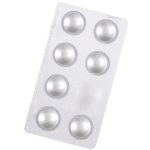
At Treated, we only supply the tablet form of Stemetil which comes as a 5mg dose. Depending on the condition being treated, the dosage will vary according to you and your medical history.
For Vertigo (dizziness):
The usual dose is 5mg 3 times a day. This can be increased to a total daily dosage of 30mg a day. As your treatment progresses, it may gradually decrease to a daily dosage amount of 5-10mg.
For feeling nauseous or vomiting:
The usual dose is 5-10mg a day. This can be taken up to 3 times a day.
For treatment of nausea or vomiting:
Take 20mg straight away and if needed an additional 10 mg 2 hours later.
For elderly people:
The starting dose may be lower than the usual dose.
For children over the age of 1 and weigh more than 10kg:
The dose will be dependent on your child’s weight. The dosage is usually 0.25mg for every kilogram of your child’s weight, given 2 or 3 times a day.
How we source info.
When we present you with stats, data, opinion or a consensus, we’ll tell you where this came from. And we’ll only present data as clinically reliable if it’s come from a reputable source, such as a state or government-funded health body, a peer-reviewed medical journal, or a recognised analytics or data body. Read more in our editorial policy.