

Mysimba Vs Saxenda: What’s the difference?

There are lots of weight loss treatments available, so it’s easy to feel daunted when it comes to choosing one.

Here, we’ll look at two different types in more detail: Mysimba and Saxenda.

Reviewed on Jun 11, 2024. by Dr Daniel Atkinson GP Clinical Lead Registered with GMC (No. 4624794) Next review due on Jun 11, 2027.
Daniel

Last updated on Jun 10, 2024.

Finding the right weight loss treatment

Weight loss medications can reverse the effects of obesity and help you lose weight safely and steadily. Used as part of a plan that includes healthy eating and increased exercise, prescription-strength pills and injections can provide an extra push towards reaching your weight loss target.

So how do you know which treatment to use? 

Talking to a clinician can give you a better idea of how each medication works, and what you can expect from it. Here, we’ll look at two medications in more detail. Mysimba is a tablet, and Saxenda is an injectable pen. They’re both used daily, but work in different ways to support weight loss.

A closer look at Mysimba

Mysimba_blister-pack

Mysimba is a daily weight loss tablet. It contains two active ingredients, naltrexone and bupropion, which target an area in your brain involved in appetite regulation. The tablets also increase the amount of energy you expend. Working together, these two actions can help you lose weight over time.

For the first week you’ll take one Mysimba tablet a day, in the morning. Then each week you’ll take one extra tablet a day until you reach week four, after which you’ll stay on the maintenance dose of four tablets a day (two in the morning and two in the evening).

How it works

One way the tablets work is by acting on the neurotransmitters dopamine and noradrenaline. These chemicals are involved in regulating mood, and your brain’s sense of ‘reward’ from pleasure, including from the food you eat.

This is where the bupropion in Mysimba comes in. Because it helps balance these chemicals, bupropion is also used in antidepressants and stop smoking treatments. By targeting these neurotransmitters, it can reduce unhealthy food cravings, encouraging you to eat less. The other ingredient, naltrexone, is an opioid antagonist. Like bupropion, it’s often used in medications that treat addiction and can prevent urges to overeat.

Another way the tablets work is by increasing energy expenditure. This can help boost the rate at which you burn calories. A calorie deficit is considered to be the most important factor for losing weight.

How do you use it?

Mysimba dosing schedule:
Every morning Every evening
Week 1 1 tablet No tablet
Week 2 1 tablet 1 tablet
Week 3 2 tablets 1 tablet
Week 4 (and beyond) 2 tablets 2 tablets

Mysimba works best when you take it after you’ve eaten, rather than on an empty stomach. This can help you avoid any side effects. Upping the amount of tablets you take week-by-week should also help with this, and means your body can adjust to the medication steadily.

How effective is it for weight loss?

Studies have shown Mysimba to be an effective weight loss treatment. Meta-analysis (combined results) of four studies, which includes around 4,500 patients with overweight or obesity, showed that the tablets can help people achieve significant weight loss.

Every patient across the trials received advice about exercise and diet, as well as counselling about weight loss. In three of the studies, average weight loss was around 3.7%-5.7%. In the remaining study, where the counselling was more thorough, this rose to an overall weight loss of around 8.1%.

Overall, Mysimba was most effective when used for 56 weeks or longer. This supports the idea that weight loss, and weight loss treatments, don’t work overnight. Losing weight needs a holistic approach, and Mysimba will be most effective when used as part of a broader plan that involves changing your eating habits and getting more exercise.

What are the side effects?

You can get side effects while taking any medication, but there’s no guarantee which ones you’ll get. Common Mysimba side effects include nausea, headaches, and constipation. These should usually pass as your body adjusts to the tablets.

You might find that, as you increase your dose each week, you feel the side effects more. If things don’t settle by week four onwards, it might be time to try an alternative treatment. A clinician can help you choose a medication that might not affect you in the same way.

Mysimba isn’t suitable for everyone. If you’re sensitive to any of the ingredients in it, or if you have chronic hypertension (high blood pressure), you might be recommended something else. And if you have reduced liver or kidney function, or have ever suffered from seizures, Mysimba won’t be prescribed to you. The patient information leaflet that comes with the tablets includes a complete list of all possible Mysimba interactions, and providing as much information as you can during your consultation helps our clinicians narrow down the most suitable treatments for you.

Price

The cost-effectiveness of Mysimba when compared to Saxenda can depend on several factors. You can get 112 tablets at time, which would be the equivalent of 28 days, or four weeks, if you were taking the maintenance dose of four tablets a day.

However, it’s worth bearing in mind that for the first month you use Mysimba, you’ll actually take fewer pills than this. (You’ll only take one pill a day during your first week, two during the second, and three for the third.)

This means that your first pack will actually last you longer than a month. Another factor is the amount of time you intend on using Mysimba for, which is something a clinician can help you with. In the weight loss studies we’ve mentioned, the tablets were most effective when used for at least 56 weeks. If you plan on using Mysimba for this long, which is over a year, it’s worth looking at the cost over time. If this is something you’re concerned about, you could try an injection like Saxenda first to see if it helps you lose weight. If for any reason it’s not suitable for you, you can talk to a clinician about which weight loss tablets would be the least expensive when used for around 14 months (56 weeks).

A closer look at Saxenda

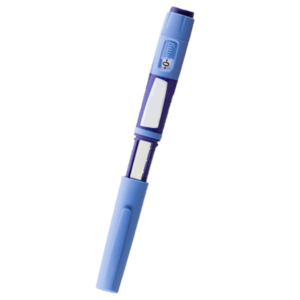
Single Saxenda pen

Saxenda is another type of weight loss treatment, but it works differently to Mysimba. It’s an injectable pen that you use on your skin.

It belongs to a class of medications called GLP-1 agonists. These mimic the hormone GLP-1, which is produced naturally by your body and helps control your blood sugar.

It also slows down the speed at which food leaves your stomach. By slowing down this process, known as gastric emptying, you feel fuller for longer, making you want to eat less.

How it works

Saxenda contains liraglutide, which belongs to a class of medications known as incretin mimetics. Liraglutide works by:

  1. Helping your pancreas to balance your blood sugar by reducing insulin when blood glucose levels get too high.
  2. Slowing your digestion down, making you feel less hungry.

How do you use it?

It’s a subcutaneous injection, which means it’s applied to the fatty tissue beneath your skin. So if you’re not fond of needles, this is worth bearing in mind. Subcutaneous injections are less painful than ones that are injected into your muscles (intramuscular), though, because the needles are much smaller. This means you should only feel a small sting when you use Saxenda, or nothing at all.

Saxenda dosing schedule
Daily
Week 1 0.6mg pen
Week 2 1.2mg pen
Week 3 1.8mg pen
Week 4 2.4 mg pen
Week 5 (and beyond) 3.0mg pen

Like Mysimba tablets, you use Saxenda once a day. The pens are changed every week, and with each new pen you change the amount of liraglutide you’ll inject each day until you reach the maintenance dose of 3mg.

How effective is it for weight loss?

In a trial that compared liraglutide against a placebo for managing weight loss, liraglutide was shown to help patients who used it for a year lose weight. Liraglutide was also examined to see if using it alongside an exercise programme helped patients lose more weight than exercising alone, and the results showed that combining the medication with activity improved weight loss.

Another collection of studies, which combines the results of five different trials, Saxenda helped patients who took it at its maximum dose lose 7.5% of their body weight.

Saxenda is always prescribed as part of a holistic plan to manage your weight. As well as exercising more, you’ll be encouraged to eat a balanced diet full of fruit, vegetables and lean protein. This approach means the changes you make can last, and you can keep to a healthy weight once you’ve stopped using the pens.

What are the side effects?

Like Mysimba and nearly all other medications, Saxenda comes with a risk of side effects. Reactions to treatments tend to differ person-to-person, so there’s no guarantee which side effects you’ll get if you do get any.

And like Mysimba, the most common Saxenda side effects are nausea, constipation, and headaches. They should settle down as you adjust to taking the medication daily. Dizziness, rash and indigestion are also listed as common side effects, among others. If you feel like any side effects you get from Saxenda put you off using the pens, a clinician might suggest trying a different treatment.

It’s not known if Saxenda can affect pregnant women. If you’re pregnant or planning on having a baby, it’s unlikely you’ll be prescribed medication that contains liraglutide. The same goes for if you’re breastfeeding, but this is something a clinician will discuss with you at the start of your treatment plan.

Price

Saxenda is generally more expensive to use each month than Mysimba, because the pens last around six days once you reach the maintenance dose. You may be able to get several month’s worth of either medication in advance though, which could save you money in the long-run.

Knowing how long you intend to use Saxenda for can give you a good idea of how much you’ll spend overall. It might be helpful to discuss this with a clinician when you start treatment, so you’re not surprised by how it sets you back each month.

Reference Popover #ref1
Reference Popover #ref2
Reference Popover #ref3
Reference Popover #ref4
Reference Popover #ref5
This page was medically reviewed by Dr Daniel Atkinson, GP Clinical Lead on Jun 11, 2024. Next review due on Jun 11, 2027.

Last updated on Jun 10, 2024.

How we source info.

When we present you with stats, data, opinion or a consensus, we’ll tell you where this came from. And we’ll only present data as clinically reliable if it’s come from a reputable source, such as a state or government-funded health body, a peer-reviewed medical journal, or a recognised analytics or data body. Read more in our editorial policy.

Choose how you do healthcare.

We know health, but you know you.
Our experts tell you what’s safe, but you decide what’s best.

Consult on your own time

Answer a few questions and tell us about yourself. Get tailored advice from our clinicians so you can choose better.

Treatments to fit your life

Choose your treatment and how often you have it delivered.

Your health,
continued

We know things change. It’s the nature of life. We’ll check in regularly to make sure your treatment is still right for you.

Control at your fingertips

Pause. Change. Skip. Start again. Any time you like.

Here's how we're doing so far.

Give us the inbox treatment.

We're making healthcare more about you. Sign up to our newsletter for personalised health articles that make a difference.

Disclaimer: The information provided on this page is not a substitute for professional medical advice, diagnosis, or treatment. If you have any questions or concerns about your health, please talk to a doctor.