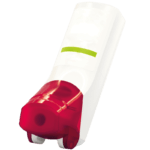
How to use your Fostair inhaler
Firstly, we recommend that you check for possible allergens in the active ingredients in your Fostair. The medicine contains a small amount of alcohol, which could make it unsuitable for you. A clinician will advise you about the number of puffs to use daily.
To use your Fostair inhaler:
- Test your inhaler. Remove the protective cap and release one puff by depressing the canister. The counter should read 120 if it’s brand new.
- If the mouthpiece is clean and free from dust, place your lips around it.
- Breathe out deeply, and slowly.
- As you breathe in again, press the top of the inhaler to release a puff.
- Hold your breath for as long as you can, and then remove the inhaler from your mouth.
- If you need another puff, repeat steps 2-5 after half a minute or so.
For regular daily use, take one or two puffs twice a day, once in the morning and once again in the evening, as instructed by your clinician.
If you’re using it as-needed, take one puff when you get asthma symptoms, then give it a few minutes. If you’re still not feeling better, you can take another puff. Don’t exceed six puffs a day. If you’ve reached the maximum and your symptoms are still bothering you, get medical help straight away.
We suggest you rinse your mouth, or brush your teeth, after using your Fostair. That’ll ensure you don’t get any problems like dry mouth, a sore throat or a fungal infection.
Can I overuse my Fostair inhaler?
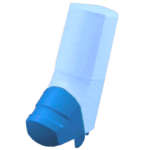
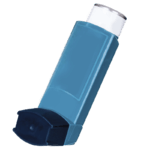
Fostair can be used as both a preventer and a reliever for asthma. These combination inhalers are sometimes called ‘pink’ inhalers. Colours are often used as terms to denote what inhalers do, such as the more common blue (reliever or rescue, used as-needed when symptoms flare up) and brown (preventer, used daily).
If you’re using your Fostair inhaler for maintenance therapy only, the maximum daily dose is 4 puffs a day (for both strengths). If you’re using it for both maintenance and relief, the maximum daily dose is 8 puffs a day.
We advise sticking to your recommended dose and seeing if your symptoms improve before switching doses. Our experts can advise you about using a separate reliever, should you need one.
Is the pressurised version of Fostair better than the NEXThaler?
Asthma treatments largely focus on the same thing – improving your breathing. By addressing the inflammation in your lungs, inhalers and tablets aim to prevent inflammation in your airways. Though similar, COPD is a bit more complex and involves treating more than just airflow obstruction. Because of this, it’s best you ask our team some questions about using Fostair to treat COPD.
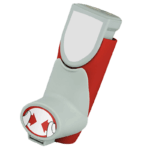
The combination of active ingredients in your Fostair pressurised metered dose inhaler (pMDI) are exactly the same as the ones in the Fostair NEXThaler. Both are equally as effective at treating your symptoms, so the short answer is no. In fact, studies have shown little difference between the two types of inhaler, meaning neither is better than the other as a treatment option. [1] The main difference between the two is the inhalation technique — the NEXThaler is a dry powder inhaler (DPI) so the technique for using it differs slightly from the Fostair.
The pressurised metered dose version we offer should be enough to keep your asthma symptoms in check.
How we source info.
When we present you with stats, data, opinion or a consensus, we’ll tell you where this came from. And we’ll only present data as clinically reliable if it’s come from a reputable source, such as a state or government-funded health body, a peer-reviewed medical journal, or a recognised analytics or data body. Read more in our editorial policy.