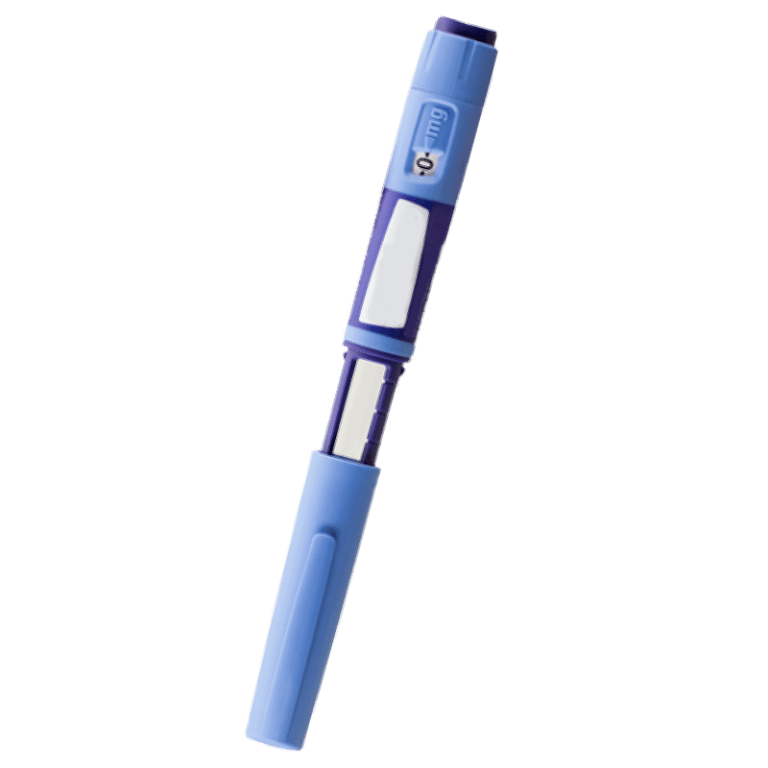

What are the different liraglutide injections for weight loss?
The original liraglutide weight loss injection was Saxenda, produced by Novo Nordisk. It was the first GLP-1 medication licensed for weight loss, introduced before the more recent Wegovy and Mounjaro. But unlike Wegovy and Mounjaro, which are injected once a week, Saxenda is a daily injection.
Recently, the patent to Saxenda ran out. This means that other manufacturers can produce their own (generic) versions of it, often at a cheaper cost. Generic medications can either go by the name of the active ingredient, or a different name. These newly-released generic versions of Saxenda include:
What’s the difference between them?
Not much. They all work in largely the same way, and are used the same way, too. The way they’ll differ is in appearance, packaging, and cost. So you can use whichever version you prefer.
Generally, having multiple versions of the same medication helps keep down costs (through competition), and increases availability, making it easier for you to get your treatment affordably and reliably.
How liraglutide works
If you’re looking for some extra help while trying to lose weight, a clinician might suggest liraglutide. It’s an injectable pen you use daily. It works by reducing your appetite and helping you feel full.
Liraglutide belongs to a class of medications called incretin mimetics. These mimic a hormone which is produced by your intestines, called GLP-1, which is why they’re sometimes referred to as ‘GLP-1 agonists’.
GLP-1 is released when you eat food, and has several functions. As well as reducing your appetite and increasing feelings of fullness, it also reduces blood sugar and slows down the rate at which your stomach empties. By replicating GLP-1, liraglutide can control your urges to overeat; once you’re in the habit of eating less than you normally would, your weight can start to come down.
Does liraglutide work immediately?
Liraglutide can start to work quickly, which means you might feel fuller or like you want to eat less after only a short time of using your injection. Studies have shown using liraglutide can lead to weight loss in as little as four weeks, but that doesn’t mean everyone will see changes as quickly as that. It will usually take longer before you see your weight start to consistently come down. It’s usually prescribed for 12 weeks, and if you’ve not seen any significant changes to your weight during this time (by this point, it’s typical to have lost around 5% of your initial body weight), a clinician might recommend another type of treatment.
No weight loss drug is a magic bullet. In fact, you should steer clear of any medications or supplements that claim to offer instant weight loss results. Losing weight is a gradual process and usually needs a holistic, long-term approach that involves realistic targets. Weight loss treatments like liraglutide are used as part of a plan that involves changing how you eat and increasing your activity levels. The lifestyle changes you make along the way should be lasting, so you can continue to see the benefits of healthy living once you’ve stopped using the injections.
Benefits of liraglutide
Liraglutide has the potential to offer numerous benefits beyond weight loss. If you have obesity, or a BMI of 27 or higher alongside a weight-related health condition like high blood pressure or diabetes, it can help improve your overall health and might reduce your risk of heart disease and other conditions. In a study of patients with type 2 diabetes who used liraglutide for 12 months, it was shown to have a positive effect on their blood pressure control as well as their blood glucose.
One effect of Liraglutide is to reduce the amount of glucose your body produces, which can support glycemic control. Glycemic control is how your body manages blood sugar in order to keep it in the healthy range. Type 2 diabetes can develop slowly; if you’ve had your blood sugar levels checked and been told you’re prediabetic, it can serve as a warning that your blood sugar is poorly managed.
Although weight loss injections like Nevolat and Biolide aren’t licensed for diabetes management, they can still help to bring your blood sugar back into balance. If you’re prediabetic, liraglutide can help you achieve this along with other diabetes medications and lifestyle changes.
As well as heart disease and diabetes, losing weight can reduce stress on your joints, improve liver function, and boost your confidence and mood. So by using liraglutide as part of a robust weight loss plan, you can improve a number of conditions while also preventing several others from developing.
How long should I take liraglutide for?
How long you use any weight loss treatment usually comes down to you, and the target weight you’re trying to reach. Weight loss is a personal journey, and doesn’t always follow a linear path.
You might find some changes you make, such as how you eat or the kind of exercise you do, help accelerate things. Equally, you might find your weight loss plateaus, and need to figure out why.
Generally, you’ll stick with the injections until you’ve reached a healthy weight that you’re happy with. This is something you can discuss with a clinician before you start using liraglutide.
Maximising results with liraglutide
While you’re using liraglutide, you’ll feel less hungry than you normally would. The injections also make you feel fuller when you have eaten, which can help ease food cravings and reduce tendencies to snack. Because you’re eating less, you’ll be consuming fewer calories each day.
Creating a calorie deficit is widely considered the most important approach to losing weight. One way to achieve this is by simply eating fewer calories. This is something you’ll be encouraged to do while you use liraglutide, and the injections should make it a lot easier. After a period of time of eating fewer calories, you should start to lose weight.
Another way of creating a calorie deficit is to burn them through exercise. This can also help maximise weight loss results.
While exercise is known to promote weight loss, there’s no one-size-fits-all approach in terms of which to do, and for how long. Finding the right balance of activity is often a case of figuring out what suits you best. While high intensity workouts burn the most fat, it’s important to pace yourself to avoid injury. If you’ve not done any exercise in a while, picking up an injury from overexertion will only hamper your efforts.
Try starting with some gentle routines, and find a rhyme you’re comfortable with. Once you’re in the habit of exercising, you can look at some workout routines and strength training, which can both encourage faster weight loss.
Using liraglutide
Liraglutide is a self-administered injection. Whether you’ve used similar injections before or not, it’s recommended to have a visual demonstration before your first dose, to make sure you’re using the injections safely each time.
Where do you inject liraglutide?
Liraglutide is injected subcutaneously (under the skin) on your stomach, thigh, or upper arm. It must never be injected intravenously or intramuscularly. Ideally you should have a healthcare professional direct you on how to do it when using it for the first time, to make sure that you don’t make a mistake.
You should also regularly rotate your injection site to avoid skin issues developing.
When should you use liraglutide?
There is no ‘best’ time of day to use liraglutide.
But the medication is at its highest amount in your system for about 13 hours after injecting, so you might find it helpful to inject in the morning to feel the full effects of it while you’re awake (and having meals).
Once you’re set on a time you should use it at that same time each day. The time of day and when you eat meals doesn’t affect how (or how well) it works.
Liraglutide safety information
It’s normal to feel sick, have headaches or experience diarrhoea when you first start using liraglutide. These are the most commonly reported side effects, but that’s not a guarantee you’ll get them.
People will respond differently to the injections, so you might find you don’t get any side effects like this.
If you feel like the side effects you experience are severe and are putting you off using the injections, get in touch with a clinician. They might recommend adjusting your dose, or have a better idea of why you’re responding to liraglutide that way. They can suggest different treatments if they think they will suit you better.
Although there are no specific mentions of drinking alcohol while you’re using liraglutide, it’s worth keeping an eye on how it might affect your treatment. The after-effects of drinking alcohol, like an upset stomach or nausea, can sometimes mirror the side effects liraglutide can cause.
Alcoholic drinks often contain a lot of sugar, and are usually high-calorie. This is another reason to watch what you drink while using liraglutide — the occasional indulgence won’t scupper your weight loss plans, but overdoing it could counteract the effects of your medication.
How long does liraglutide stay in your system?
It usually takes about three days for all traces of liraglutide in your body to go away.
The half-life of liraglutide – the amount of time it takes the quantity of the active ingredient in your system to reduce by half – is about 13 hours. So if you take 3mg of liraglutide at 7am, by 8pm you should only have 1.5mg left in your body.
If you’re thinking of stopping liraglutide, you should discuss it with a clinician first. Abruptly ending your treatment might cause unwanted side effects and immediate changes to your appetite. Stopping liraglutide will be much more comfortable if you taper off the injections in a controlled way, with guidance from a medical professional.
Is liraglutide right for you?
Liraglutide is a prescription-strength weight loss treatment, and a clinician will first need to make sure it seems like the best option for you before you start using it. If you’ve tried oral medications like Orlistat and they haven’t been successful, then liraglutide might be suggested as an alternative.
Administering your own injections might seem like a daunting prospect if you’ve never done it before, but it’s a straightforward process that will get easier the more you do it. If you’ve got any doubts about using liraglutide, or questions about potential side effects and what to expect, you can talk it through with a clinician before beginning your treatment plan.
Reference Popover #ref2
Treated trusted source
The Lancet (2017).
3 years of liraglutide versus placebo for type 2 diabetes risk reduction and weight management in individuals with prediabetes: a randomised, double-blind trial.
Reference Popover #ref3
Treated trusted source
Howell, R., et al (2019).
Clinical potential of liraglutide in cardiovascular risk reduction in patients with type 2 diabetes: evidence to date. Diabetes, Metabolic Syndrome and Obesity: Targets and Therapy, Volume 12, pp.505–512.
Reference Popover #ref4
Treated trusted source
Kim, J.Y. (2020).
Optimal Diet Strategies for Weight Loss and Weight Loss Maintenance. Journal of Obesity & Metabolic Syndrome, 30(1), pp.20–31.
This page was medically reviewed by Dr Daniel Atkinson, GP Clinical Lead on Jul 12, 2024. Next review due on Jul 12, 2027.
Last updated on Jul 09, 2024.
How we source info.
When we present you with stats, data, opinion or a consensus, we’ll tell you where this came from. And we’ll only present data as clinically reliable if it’s come from a reputable source, such as a state or government-funded health body, a peer-reviewed medical journal, or a recognised analytics or data body. Read more in our editorial policy.
Let’s help you choose better.
Find treatment



Treated
Authorised and Regulated by: