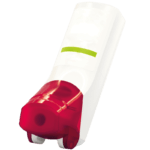
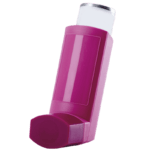
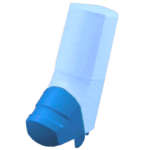
How to use Luforbec
Your clinician will advise you on how to use Luforbec, but it’s usually prescribed in the following ways:
- For daily use: Take one or two puffs twice daily, with a maximum of four puffs a day.
- For sudden asthma symptoms: use one puff and wait a few minutes. If you still don’t feel better, take another puff. But don’t exceed six puffs in a day.
Before your first use, release three puffs into the air. If you haven’t used the inhaler for two weeks or more, release one puff to ensure it’s working properly.
Then, follow these steps:
- Remove the cap and check that the mouthpiece is clean.
- Stand or sit upright. Shake the inhaler well before using it.
- Breathe out gently.
- Place the mouthpiece in your mouth, and seal your lips around it. Don’t bite it, and keep your tongue flat.
- As you start to breathe in slowly, press down on the inhaler to release one puff. Keep breathing in steadily for 3–5 seconds.
- Take the inhaler out, hold your breath for about 10 seconds, then breathe out slowly. But don’t breathe into the inhaler.
- If you need another puff, wait half a minute and repeat.
- Put the cap back on once you’re done.
After using your inhaler, give your mouth a quick rinse or brush your teeth to help prevent dryness, sore throat, or infections.
If you find it challenging to press and breathe in at the same time, a spacer can make using your inhaler easier, help the medicine reach your lungs better, and reduce side effects. Ask your clinician if it might work for you.
Does Luforbec need to be kept in the fridge?
Luforbec needs to be stored in the fridge before it’s dispensed by the pharmacy. But once you’ve got it at home, you can store it at room temperature.
That’s because it contains beclometasone in an extra-fine particle form, which is more potent than the version used in older inhalers.[1] But this also means that, to keep it stable, Luforbec has to be refrigerated until it’s handed over to you.
How long does Luforbec take to work?
Luforbec can start working really fast, in just two to three minutes, when used for sudden asthma symptoms, and the effects can last up to 12 hours.[2]
But when used daily as a preventer, it takes time to build up. You may notice some improvement within three to seven days, but it often takes a few weeks to experience the full benefits.
Keep using your medication daily as directed, even if you start feeling better.
And if your symptoms don’t get better after a week or start to worsen, make sure to reach out to your clinician.
How we source info.
When we present you with stats, data, opinion or a consensus, we’ll tell you where this came from. And we’ll only present data as clinically reliable if it’s come from a reputable source, such as a state or government-funded health body, a peer-reviewed medical journal, or a recognised analytics or data body. Read more in our editorial policy.