

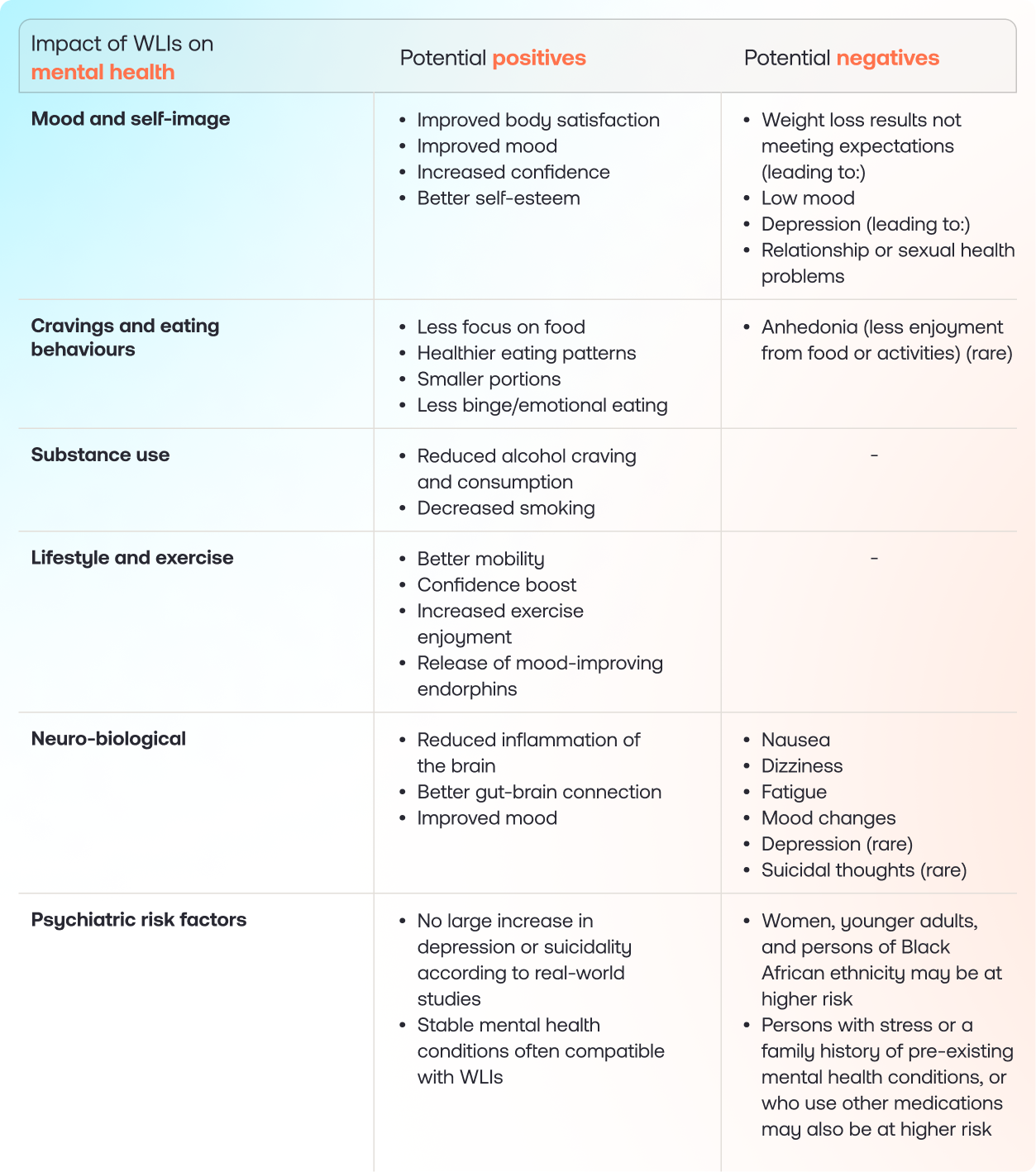

Improved self-image
Many people prefer their appearance after losing weight, which often improves body satisfaction, mood, and overall quality of life.
Interestingly, these psychosocial gains don’t always correlate with the amount of weight loss, which could suggest—purely speculatively—that even the process of trying to lose weight may offer meaningful mental health benefits.
Reduced food noise
People with obesity often experience what’s been called “food noise”, which basically refers to constant thoughts about what, when, or how much to eat, often accompanied by guilt.
Recent research suggests that GLP‑1 receptor agonists (the drugs used in WLIs) can reduce this mental clutter by lowering appetite signals, cravings, and preoccupation with food.
Anecdotally, users report that fewer intrusive food thoughts can free cognitive and emotional bandwidth for work, relationships, hobbies, or other areas that were previously overshadowed by constant food-related worry.
But more research is needed to fully measure this “freeing up” effect.
Less alcohol and substance use
Still-ongoing research suggests that WLIs can help with other addictive behaviours and substance misuse, including alcohol and smoking.
A recent randomised clinical trial found that once-weekly semaglutide (the active drug in Ozempic and Wegovy) reduced both craving for and consumption of alcohol over nine weeks of treatment. The same study also linked semaglutide to a reduction in smoking.
If WLIs decrease substance use (like alcohol and smoking), this could in turn reduce mood disorders, anxiety, and the social or work-related harms often associated with addiction — another way in which these medications can support mental health.
An ongoing trial is currently investigating semaglutide’s potential to reduce alcohol consumption.
Healthier eating patterns
GLP-1s have reduced binge eating and emotional eating behaviours in several clinical and observational studies. Participants in these studies often report:
- more regular meals,
- smaller portion sizes,
- and less impulsive snacking.
These behavioural shifts are partly due to appetite suppression and changes in the brain’s reward system.
Being more intentional with eating might have a knock-on effect on your overall health, including mental health. Improved eating habits support better nutrient intake, stronger satiety signals, and more balanced blood sugar levels, which are all linked to better mood and energy.
There’s also growing interest in GLP-1’s effects on the gut-brain axis. Though more research is needed, GLP-1s might help regulate mood by promoting the growth of “good” gut bacteria, improving gut health, and correcting nutrient deficiencies.
Reduced inflammation
When neuroinflammation (inflammation in the brain) affects your brain, it can disrupt levels of important brain chemicals like noradrenaline, serotonin, and dopamine, which can trigger anxiety and depression.
Studies in animals show that GLP-1s can help tone down neuroinflammation, which means they could have protective effects on thinking and mood.
But human data linking reduced neuroinflammation to improved mood are still sparse, so more research is needed before we can pin this down as a clear route to better mental health.
Exercise is more enjoyable (and more frequent)
Being overweight can make movement uncomfortable and leave some people feeling self-conscious, especially in the gym or group classes.
But losing weight can:
- take the pressure off your joints,
- reduce exertion,
- and improve confidence.
Plus, exercise releases endorphins that reduce stress and can help lift your mood.